Tuyory 162 mg
Solution for injection in pre-filled pen
tocilizumab
Patient Card
Tuyory (tocilizumab)
20 mg/mL concentrate for solution for infusion;
162 mg solution for injection in pre-filled syringe;
162 mg solution for injection in pre-filled pen
PATIENT CARD
This card is for both paediatric and adult patients. Use accordingly.
This card is provided to further minimise the risks associated with the use of Tuyory and to guide patients when to seek medical advice.
This educational material is provided by MAH(s) and is mandatory as a condition of the Marketing Authorisation to further minimise important selected risks
This patient card contains important safety information that patients or parents/guardians of patients need to be aware of before, during and after treatment with Tuyory. Tuyory treatment may be administered as an intravenous (IV) infusion or subcutaneous (SC) injection.
- Show this card to ANY healthcare professional involved in your care.
- Read the Patient Information Leaflet that comes with your medicine and Tuyory Guide for risk minimisation for patients for more information.
As a Rheumatoid Arthritis (RA), polyarticular Juvenile Idiopathic Arthritis (pJIA), or systemic Juvenile Idiopathic Arthritis (sJIA) patient, your treatment may be administered as an IV infusion or SC injection.
As a Giant Cell Arteritis (GCA) patient, your treatment will be by SC injection only.
As a COVID-19 patient, your treatment will be IV infusion only.
Tuyory may make an existing infection worse or increase the chance of getting a new infection. You should not receive Tuyory if you have an active serious infection. In addition, some previous infections may reappear with use of Tuyory.
- Seek medical advice if any signs/ symptoms (such as persistent cough, wasting/ weight loss, low-grade fever) suggestive of a tuberculosis (TB) infection occurring during or after treatment with Tuyory. You should have been screened and found to have no active TB prior to treatment with Tuyory
- Tell your doctor immediately if you experience signs or symptoms of an infection. Some infections might become very serious and may require immediate treatment and hospitalisation. Seek immediate medical attention if you experience any signs/symptoms of an infection, including:
- Fever and chills
- Persistent cough
- Weight loss
- Throat pain or soreness
- Wheezing
- Red or swollen skin or mouth blisters, skin tears or wounds
- Severe weakness or tiredness
- Stomach pain
- Talk to your healthcare professional about any vaccinations you may need before you start treatment with Tuyory.
- Seek guidance from your healthcare professional about whether you should delay your next treatment if you have an infection of any kind (even a head cold) at the time of your scheduled treatment.
- Younger children with pJIA/sJIA may be less able to communicate their symptoms therefore parents/ guardians of pJIA or sJIA patients should contact their healthcare professional immediately if their child is unwell for no apparent reason.
Patients using Tuyory may develop complications of diverticulitis, which can become serious if not treated.
- Seek immediate medical attention if you develop fever and/or persistent stomach pain or colic with change in bowel habits or notice blood in your stool and inform your doctor that you are taking Tuyory.
- Inform your doctor if you have or have had intestinal ulceration or diverticulitis (inflammation in parts of your large intestine).
Tuyory treatment can often cause an increase in a specific set of blood laboratory tests called ‘liver enzyme’ tests which are used to measure the function of your liver. Changes in these liver enzyme blood tests will be monitored regularly while you are receiving Tuyory.
On rare occasions, patients have experienced serious life-threatening liver problems, some of which have required liver transplant.
Rare side effects, which may affect up to 1 in every 1,000 patients receiving Tuyory, include inflammation of the liver (hepatitis) and jaundice (yellowing of the skin).
Very rarely (affecting 1 in every 10,000 patients receiving Tuyory) patients can experience liver failure.
- Tell your doctor immediately if you notice a yellowing of the skin and eyes, have dark brown coloured urine, pain or swelling in the upper right side of the stomach area or you feel very tired and confused
- Tell your doctor if you have liver disease before you receive Tuyory
Tuyory suppresses the acute-phase response (inflammatory response), i.e., it normalizes CRP and ESR levels. Therefore, particular attention is needed for the timely diagnosis of a serious infection in patients treated with biologics. Signs and symptoms of a serious infection may be attenuated by suppression of the acute-phase response.
Factors to consider:
- Tuyory normalizes CRP levels rapidly in most patients, within two weeks, indicating reduced systemic inflammation. Therefore, the CRP level may not be a reliable indicator of infection in patients undergoing Tuyory therapy.
- The effects of Tuyory on CRP, on neutrophils (which may be reduced), and on signs and symptoms of infection (e.g., suppression of fever) must be considered when a patient is being screened for potential infection.
If you get any side effects, talk to your doctor, pharmacist or nurse. This includes any possible side effects not listed in the package leaflet. You can also report side effects to Gedeon Richter local office.
Dates of Tuyory treatment:*
* Please make sure you also have a list of all your other medicines with you at any visit to a healthcare professional
Indication:
Start of treatment:
Last treatment:
Dosage:
Route of administration: IV / SC
Patient’s/Parent’s/Guardian’s name:
Doctor’s name:
Doctor’s phone number
Package leaflet: Information for the user
Tuyory 162 mg solution for injection in pre-filled pen
tocilizumab
▼ This medicinal product is subject to additional monitoring. This will allow quick identification of new safety information. You can help by reporting any side effects you may get. See the end of section 4 for how to report side effects.
Read all of this leaflet carefully before you start using this medicine because it contains important information for you.
- Keep this leaflet. You may need to read it again.
- If you have any further questions, ask your doctor, pharmacist or nurse.
- This medicine has been prescribed for you only. Do not pass it on to others. It may harm them, even if their signs of illness are the same as yours.
- If you get any side effects, talk to your doctor, pharmacist or nurse. This includes any possible side effects not listed in this leaflet. See section 4.
In addition to this leaflet, you will be given a Patient Card, which contains important safety information that you need to be aware of before and during treatment with Tuyory.
What is in this leaflet
- 1. What Tuyory is and what it is used for
- 2. What you need to know before you use Tuyory
- 3. How to use Tuyory
- 4. Possible side effects
- 5. How to store Tuyory
- 6. Contents of the pack and other information
Tuyory contains the active substance tocilizumab, which is a protein made from specific immune cells (monoclonal antibody), that blocks the action of a specific protein (cytokine) called interleukin-6. This protein is involved in inflammatory processes of the body, and blocking it can reduce the inflammation in your body. Tuyory is used to treat:
- adults with moderate to severe active rheumatoid arthritis (RA), an autoimmune disease, if previous therapies did not work well enough.
- adults with severe, active and progressive rheumatoid arthritis (RA), who have not had previous treatment with methotrexate.
Tuyory helps to reduce RA symptoms such as pain and swelling in your joints and can also improve your performance of daily tasks. Tuyory has been shown to slow the damage to the cartilage and bone of the joints caused by the disease and to improve your ability to do normal daily activities.
Tuyory is usually given in combination with another medicine for RA called methotrexate. However, Tuyory can be given alone if your doctor determines that methotrexate is inappropriate.
- adults with a disease of the arteries called giant cell arteritis (GCA), caused by inflammation of the body’s largest arteries, especially those that supply blood to the head and neck. Symptoms include headache, fatigue and jaw pain. Effects can include strokes and blindness.
Tuyory can reduce pain and swelling in the arteries and veins in your head, neck and arms.
GCA is often treated with medicines called steroids. They are usually effective, but can have side effects if used at high doses for a long time. Reducing the steroid dose can also lead to a flare-up of the GCA. Adding Tuyory to the treatment means that steroids can be used for a shorter time, while still controlling GCA.
- children and adolescents, aged 12 years and over, with active systemic juvenile idiopathic arthritis (sJIA), an inflammatory disease that causes pain and swelling in one or more joints as well as fever and rash.
Tuyory is used to improve the symptoms of sJIA. It can be given in combination with methotrexate or alone.
- children and adolescents, aged 12 years and over, with active polyarticular juvenile idiopathic arthritis (pJIA). This is an inflammatory disease that causes pain and swelling in one or more joints.
Tuyory is used to improve the symptoms of pJIA. It can be given in combination with methotrexate or alone.
Do not use Tuyory
- if you or a child patient you look after are allergic to tocilizumab or any of the other ingredients of this medicine (listed in section 6).
- if you or a child patient you look after have an active, severe infection.
If either of these applies to you, tell a doctor. Do not use Tuyory.
Warnings and precautions
Talk to your doctor, pharmacist or nurse before using Tuyory.
- If you experience allergic reactions such as chest tightness, wheezing, severe dizziness or light- headedness, swelling of the lips, tongue, face or skin itching, hives or rash during or after the injection, then tell your doctor immediately.
- Do not take the next dose until you have informed your doctor AND your doctor has told you to take the next dose if you have experienced any allergic reaction symptoms after Tuyory administration.
- If you have any kind of infection, short- or long-term, or if you often get infections. Tell your doctor immediately if you feel unwell. Tuyory can reduce your body’s ability to respond to infections and may make an existing infection worse or increase the chance of getting a new infection.
- If you have had tuberculosis, tell your doctor. Your doctor will check for signs and symptoms of tuberculosis before starting Tuyory. If symptoms of tuberculosis (persistent cough, weight loss, listlessness, mild fever) or any other infection appear during or after therapy tell your doctor immediately.
- If you have had intestinal ulcers or diverticulitis, tell your doctor. Symptoms would include abdominal pain and unexplained changes in bowel habits with a fever.
- If you have liver disease, tell your doctor. Before you use Tuyory, your doctor may do a blood test to measure your liver function.
- If any patient has recently been vaccinated, or is planning a vaccination, tell your doctor. All patients should be up-to-date with all their vaccinations before they start treatment with Tuyory. Certain types of vaccines should not be given while receiving Tuyory.
- If you have cancer, tell your doctor. Your doctor will have to decide if you can still be given Tuyory.
- If you have cardiovascular risk factors such as raised blood pressure and raised cholesterol levels, tell your doctor. These factors need to be monitored while receiving Tuyory.
- If you have moderate to severe kidney function problems, your doctor will monitor you.
- If you have persistent headaches.
Your doctor will perform a blood test before you receive Tuyory, to determine if you have a low white blood cell count, low platelet count or high liver enzymes.
Children and adolescent
Tuyory pre-filled pen is not recommended for use in children under 12 years of age. Tuyory must not be given to children with sJIA weighing less than 10 kg.
If a child has a history of macrophage activation syndrome (activation and uncontrolled proliferation of specific blood cells), tell your doctor. Your doctor will have to decide if they can still be given Tuyory.
Other medicines and Tuyory
Tell your doctor if you are taking, have recently taken or might take any other medicines (or your child is, if they are the patient). This includes medicines obtained without a prescription.
Tuyory can affect the way some medicines work, and the dose of these may require adjustment. If you are using medicines containing any of the following active substances, tell your doctor:
- methylprednisolone, dexamethasone, used to reduce inflammation
- simvastatin or atorvastatin, used to reduce cholesterol levels
- calcium channel blockers (e.g. amlodipine), used to treat raised blood pressure
- theophylline, used to treat asthma
- warfarin or phenprocoumon, used as a blood thinning agents
- phenytoin, used to treat convulsions
- ciclosporin, used to suppress your immune system during organ transplants
- benzodiazepines (e.g. temazepam), used to relieve anxiety
Due to lack of clinical experience, Tuyory is not recommended for use with other biological medicines for the treatment of RA, sJIA, pJIA, or GCA.
Pregnancy, breast-feeding and fertility
Tuyory is not to be used in pregnancy unless clearly necessary. Talk to your doctor if you are pregnant, may be pregnant, or intend to become pregnant.
Women of childbearing potential must use effective contraception during and up to 3 months after treatment.
Stop breast-feeding if you are to be given Tuyory, and talk to your doctor. Leave a gap of at least 3 months after your last treatment before you start breast-feeding. It is not known whether Tuyory is passed into breast milk.
Driving and using machines
This medicine can cause dizziness. If you feel dizzy, do not drive or use machines.
Tuyory contains polysorbate
This medicine contains 0.27 mg of polysorbate 80 (E 433) in each 162 mg/0.9 mL pre-filled pen which is equivalent to 0.3 mg/mL. Polysorbates may cause allergic reactions. Tell your doctor if you have or your child has any known allergies.
Always use this medicine exactly as your doctor, pharmaciest or nurse has told you. Check with your doctor, pharmacist or nurse if you are not sure.
The treatment will be prescribed and started by healthcare professionals experienced in the diagnosis and treatment of RA, sJIA, pJIA or GCA.
The recommended dose
The dose with for RA or GCA for adults is 162 mg (the content of 1 pre-filled pen) given once a week.
Use in adolescents with sJIA (aged 12 years and over)
The usual dose of Tuyory depends on the patient’s weight.
- If the patient weighs less than 30 kg: the dose is 162 mg (the content of 1 pre-filled pen) once every 2 weeks.
- If the patient weighs 30 kg or more: the dose is 162 mg (the content of 1 pre-filled pen) once every week.
The pre-filled pen should not be used to treat children less than 12 years of age.
Use in adolescents with pJIA (aged 12 years and over)
The usual dose of Tuyory depends on the patient’s weight.
- If the patient weighs less than 30 kg: the dose is 162 mg (the content of 1 pre-filled pen), once every 3 weeks.
- If the patient weighs 30 kg or more: the dose is 162 mg (the content of 1 pre-filled pen), once every 2 weeks.
The pre-filled pen should not be used to treat children less than 12 years of age.
Tuyory is given by injection under the skin (subcutaneously). At the start, your doctor or nurse may inject Tuyory. However, your doctor may decide that you may inject Tuyory yourself. In this case you will get training on how to inject Tuyory yourself. Parents and carers will get training on how to inject Tuyory for patients who cannot inject themselves, such as children.
Do not use if the medicine is cloudy or contains particles, is any colour besides colourless to yellowish, or any part of the pre-filled pen appears to be damaged.
After removing the cap the injection must be started within 3 minutes (see section 5. of the package leaflet)
Talk to your doctor if you have any questions about giving yourself or an adolescent patient you look after an injection. You will find detailed “Instructions for administration” at the end of this leaflet.
If you use more Tuyory than you should
Because Tuyory is given in one pre-filled pen, it is unlikely that you will receive too much. However, if you are worried, talk to your doctor, pharmacist or nurse.
If an adult with RA or GCA or an adolescent with sJIA misses or forgets a dose
It is very important to use Tuyory exactly as prescribed by your doctor. Keep track of your next dose.
- If you miss your weekly dose within 7 days, take your dose on the next scheduled day.
- If you miss your once every other week dose within 7 days, inject a dose as soon as you remember and take your next dose at your regular scheduled time.
- If you miss your weekly or once every other week dose by more than 7 days, or you are not sure when to inject Tuyory, call your doctor or pharmacist.
If an adolescent with pJIA misses or forgets a dose
It is very important to use Tuyory exactly as prescribed by the doctor. Keep track of the next dose.
- If a dose is missed within 7 days, inject a dose as soon as you remember and give the next dose at the regular scheduled time.
- If a dose is missed by more than 7 days, or you are not sure when to inject Tuyory, call the doctor or pharmacist.
If you stop using Tuyory
You should not stop using Tuyory without discussing with your doctor first.
If you have any further questions on the use of this medicine, ask your doctor, pharmacist or nurse.
Like all medicines, this medicine can cause side effects, although not everybody gets them.
Side effects could occur 3 months or more after your last dose of Tuyory.
Possible serious side effects
Tell your doctor immediately if you experience any of the following side effects:
These are common: they may affect up to 1 in 10 people
Allergic reactions during or after injection:
- difficulty with breathing, chest tightness or light-headedness
- rash, itching, hives, swelling of the, lips, tongue or face
Signs of serious infections:
- fever and chills
- mouth or skin blisters
- stomach ache
Signs and symptoms of liver toxicity:
These are rare may affect up to 1 in 1 000 people
- tiredness
- abdominal pain
- jaundice (yellow discolouration of skin or eyes)
List of other possible side effects
If you notice any of these, tell your doctor as soon as possible.
Very common side effects:
These may affect more than 1 in 10 people
- upper respiratory tract infections with typical symptoms such as cough, blocked nose, runny nose, sore throat and headache
- high blood fat (cholesterol) levels
- injection site reactions
Common side effects:
These may affect up to 1 in 10 people
- lung infection (pneumonia)
- shingles (herpes zoster)
- cold sores (oral herpes simplex), blisters
- skin infection (cellulitis) sometimes with fever and chills
- rash and itching, hives
- allergic (hypersensitivity) reactions
- eye infection (conjunctivitis)
- headache, dizziness, high blood pressure
- mouth ulceration, stomach pain
- fluid retention (oedema) in the lower legs, weight increase
- cough, shortness of breath
- low white blood cell counts shown by blood tests (neutropenia, leucopenia)
- abnormal liver function tests (increased transaminases)
- increased bilirubin shown by blood tests
- low fibrinogen levels in the blood (a protein involved in blood clotting)
Uncommon side effects:
These may affect up to 1 in 100 people
- diverticulitis (fever, nausea, diarrhoea, constipation, stomach pain)
- red swollen areas in the mouth
- high blood fat (triglycerides)
- stomach ulcer
- kidney stones
- underactive thyroid
Rare side effects:
These may affect up to 1 in 1 000 people
- Stevens-Johnson syndrome (skin rash, which may lead to severe blistering and peeling of the skin)
- fatal allergic reactions (anaphylaxis)
- inflammation of the liver (hepatitis), jaundice
Very rare side effects:
These may affect up to 1 in 10 000 people
- low counts for white blood cells, red blood cells and platelets in blood tests
- liver failure
Side effects in children and adolescents with sJIA or pJIA
Side effects in children and adolescents with sJIA or pJIA are generally similar to those in adults. Some side effects are seen more often in children and adolescents: inflamed nose and throat, headache, feeling sick (nausea) and lower white blood cell counts.
Reporting of side effects
If you get any side effects, talk to your doctor, pharmacist or nurse. This includes any possible side effects not listed in this leaflet. You can also report side effects directly via the national reporting system listed in Appendix V. By reporting side effects you can help provide more information on the safety of this medicine.
Keep this medicine out of the sight and reach of children.
Do not use this medicine after the expiry date which is stated on the pre-filled pen label and carton after EXP. The expiry date refers to the last day of that month.
Store in a refrigerator (2 °C – 8 °C). Do not freeze. Once removed from the refrigerator, the pre-filled pen can be stored up to 2 weeks at or below 30 °C.
Keep the pre-filled pens in the outer carton in order to protect from light and moisture.
Do not use if the medicine is cloudy or contains particles, is any colour besides colourless to yellowish, or any part of the pre-filled pen appears to be damaged.
The pen should not be shaken. After removing the cap the injection must be started within 3 minutes to prevent the medicine from drying out and blocking the needle. If the pre-filled pen is not used within 3 minutes of cap removal, you must dispose of it in a puncture resistant container and use a new pre-filled pen.
If following pressing the pre-filled pen against the skin, the blue indicator does not move, you must dispose of the pre-filled pen in a puncture resistant container. Do not try to re-use the pre-filled pen. Do not repeat the injection with another pre-filled pen. Call your healthcare provider for help.
Do not throw away any medicines via wastewater or household waste. Ask your pharmacist how to throw away medicines you no longer use. These measures will help protect the environment.
What Tuyory contains
- The active substance is tocilizumab.
Each pre-filled pen contains 162 mg tocilizumab in 0.9 mL. - The other ingredients are L-histidine, L-histidine monohydrochloride monohydrate, L-valine, L-methionine, polysorbate 80 (E 433) phosphoric acid, concentrated (for pH adjustment) sodium hydroxide (for pH adjustment) and water for injections (see section 2 ‘Tuyory contains polysorbate’).
What Tuyory looks like and contents of the pack
Tuyory is a solution for injection. The solution is colourless to slightly yellowish.
Tuyory is supplied as a 0.9 mL pre-filled pen containing 162 mg tocilizumab solution for injection.
Each pack contains 4 pre-filled pens and multipacks contains 12 (3 packs of 4) pre-filled pens.
Not all pack sizes may be marketed.
Marketing Authorisation Holder and Manufacturer
Gedeon Richter Plc.
Gyömrői út 19-21.
1103 Budapest
Hungary
This leaflet was last revised in 09/2026.
Detailed information on this medicine is available on the European Medicines Agency web site: https://www.ema.europa.eu.
Instructions For Use
Read and follow the Instructions for Use that come with your Tuyory pre-filled pen before you start using it and each time you get a prescription refill. Before you use the Tuyory pre-filled pen for the first time, make sure your healthcare provider shows you the right way to use it.
Important:
Keep your unused pre-filled pens in the original carton and keep in the refrigerator at 2 ˚C to 8 ˚C. Do not freeze. Once removed from the refrigerator, the pre-filled pen can be stored up to 2 weeks at or below 30 °C.
Always keep the pre-filled pen in the outer carton in order to protect from light and moisture.
- Do not remove the pre-filled pen cap until you are ready to inject Tuyory.
- Do not try to take apart the pre-filled pen at any time.
- Do not reuse the same pre-filled pen.
- Do not use the pre-filled pen through clothing.
- Do not leave the pre-filled pen unattended.
- Keep out of the reach of children.
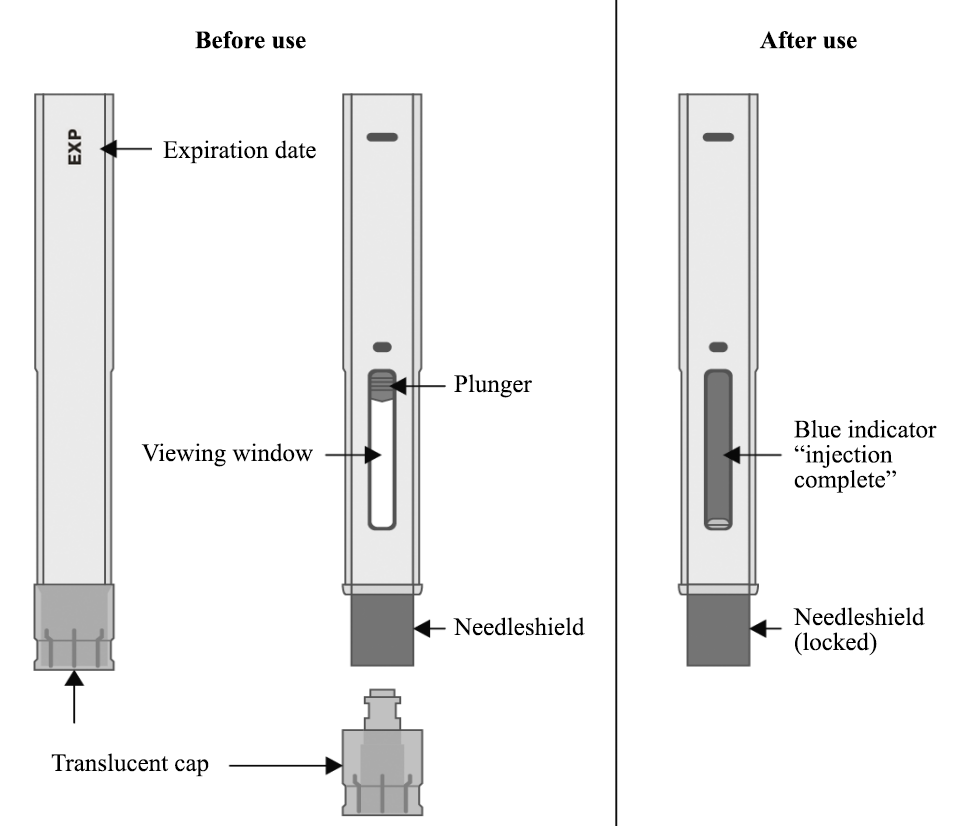
Parts of your Tuyory pre-filled pen (see Figure A).
Figure A
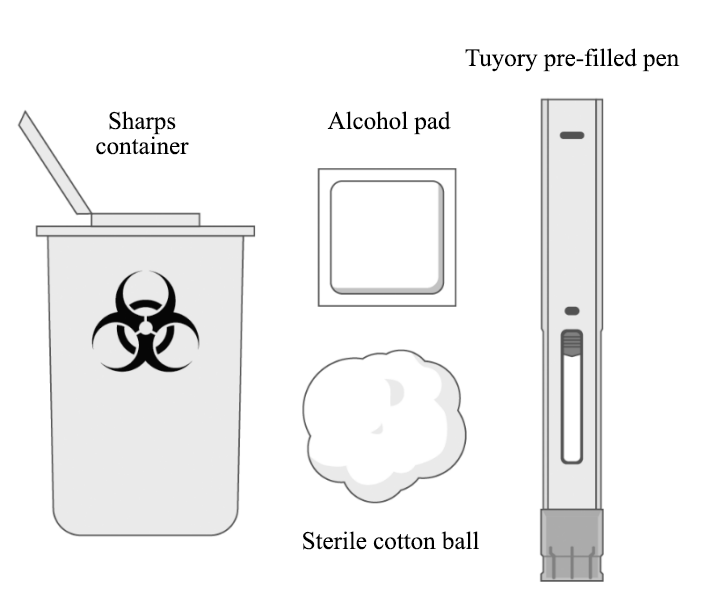
Supplies needed for an injection using your Tuyory pre-filled-pen (see Figure B)
- 1 Tuyory pre-filled pen
- 1 Alcohol pad
- 1 Sterile cotton ball or gauze
- 1 Puncture-resistant container or sharps container for safe disposal of pre-filled pen cap and used pre-filled pen (see Step 4 “Dispose of the pre-filled pen”)
Figure B
Find a comfortable space with a clean, flat, working surface.Take the box containing the pre-filled pen out of the refrigerator.
- If you are opening the box for the first time, check to make sure that it is properly sealed. Do not use the pre-filled pen if the box looks like it has already been opened.
- Check that the pre-filled pen box is not damaged. Do not use Tuyory pre-filled pen if the box looks damaged.
- Check the expiry date on the pre-filled pen box. Do not use the pre-filled pen if the expiry date has passed because it may not be safe to use.
- Open the box, and remove 1 single-use Tuyory pre-filled pen from the box.
- Return any remaining pre-filled pens in the box to the refrigerator.
- Check the expiry date on the Tuyory pre-filled pen (see Figure A). Do not use it if the expiry date has passed because it may not be safe to use. If the expiry date has passed, safely dispose of the pre-filled pen in a sharps container and get a new one.
- Check the pre-filled pen to make sure it is not damaged. Do not use the pre-filled pen if it appears to be damaged or if you have accidentally dropped the pre-filled pen.
- Do not use the pre-filled pen if the cap is missing or not securely attached.
- Place the pre-filled pen on a clean, flat surface and let the pre-filled pen warm up for 45 minutes to allow it to reach room temperature. If the pre-filled pen does not reach room temperature, this could cause your injection to feel uncomfortable and it could take longer to inject.
- Do not speed up the warming process in any way, such as using the microwave or placing the pre-filled pen in warm water.
- Do not leave the pre-filled pen to warm up in direct sunlight.
- Do not remove the cap while allowing your Tuyory pre-filled pen to reach room temperature.
- Hold your Tuyory pre-filled pen with the cap pointing down (see Figure C)
Figure C
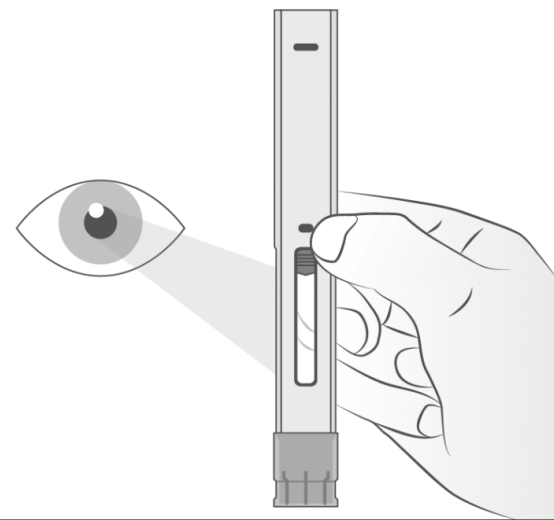
- Look in the clear Viewing window area. Check the liquid in the Tuyory pre-filled pen (see Figure C). It should be clear and colourless to pale yellow. Do not inject Tuyory if the liquid is cloudy, discoloured, or has lumps or particles in it because it may not be safe to use. Safely dispose of the pre-filled pen in a sharps container and get a new one.
- Wash your hands well with soap and water.
Choose an Injection Site
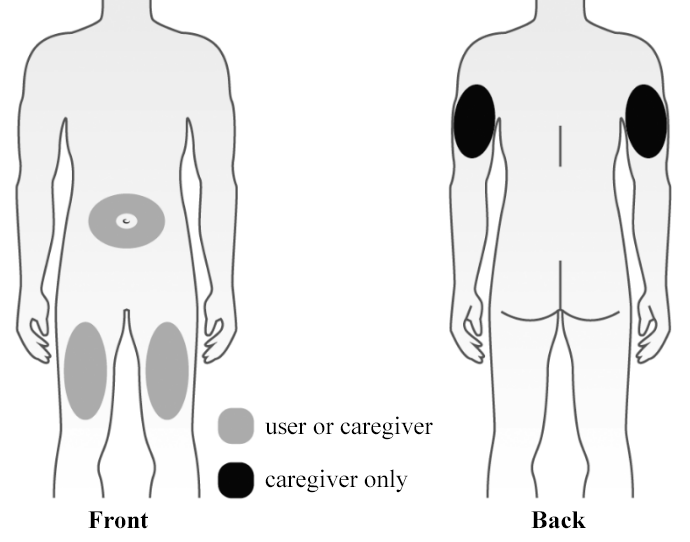
- The front of your thigh or your abdomen except for the 2-inch (5 cm) area around your navel are the recommended injection sites (see Figure D).
- The outer area of the upper arms may also be used only if the injection is being given by a caregiver. Do not attempt to use the upper arm area by yourself (see Figure D).
Rotate Injection Site
- Choose a different injection site for each new injection at least 1 inch (2.5 cm) from the last area you injected.
- Do not inject into moles, scars, bruises, or areas where the skin is tender, red, hard or not intact.
Figure D
Prepare the Injection Site
- Wipe the injection site with an alcohol pad in a circular motion and let it air dry to reduce the chance of getting an infection. Do not touch the injection site again before giving the injection.
- Do not fan or blow on the clean area.
- Hold the Tuyory pre-filled pen firmly with one hand. Pull firmly on the cap with the other hand (See Figure E).
- Do not twist the cap. Pull the cap straight off the pre-filled pen.
- If you cannot remove the cap you should ask a caregiver for help or contact your healthcare provider.
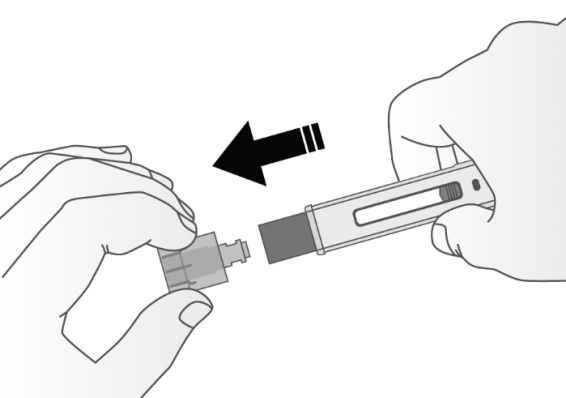
Important: Do not touch the needle shield which is located at the tip of the pre-filled pen (this is where the needle comes out (see Figure A).
- Throw away the cap in a sharps container.
- After you remove the cap, the pre-filled pen is ready for use. If the pre-filled pen is not used within 3 minutes of the cap removal, the pre-filled pen should be disposed of in the sharps container and a new pre-filled pen should be used.
- Never reattach the cap after removal.
- Hold the pre-filled pen comfortably in 1 hand by the upper part, so that you can see the Window area of the pre-filled pen.
- Use your other hand to gently pinch the area of skin you cleaned, to prepare a firm injection site (see Figure F). The pre-filled pen requires a firm injection site to properly activate.
Figure F
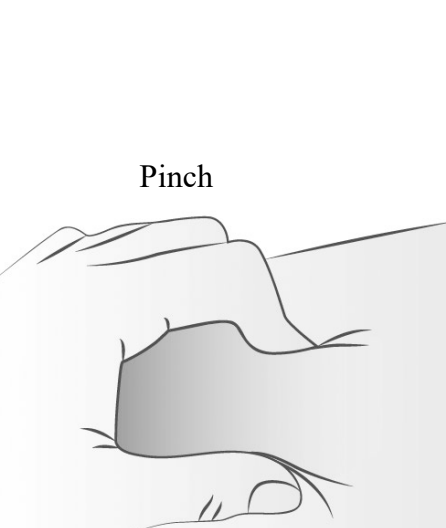
Figure G
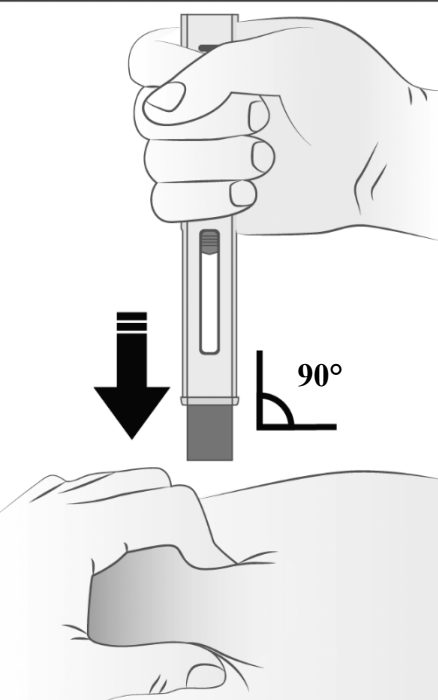
- Pinching the skin is important to make sure that you inject under the skin (into fatty tissue) but not any deeper (into muscle). Injection into muscle could cause the injection to feel uncomfortable.
- Place the needle-shield of the pre-filled pen against your pinched skin at 90 degree angle (see Figure G)
- It is important to use the correct angle to make sure the medicine is delivered under the skin (into fatty tissue), otherwise the injection could be painful and the medicine may not work.
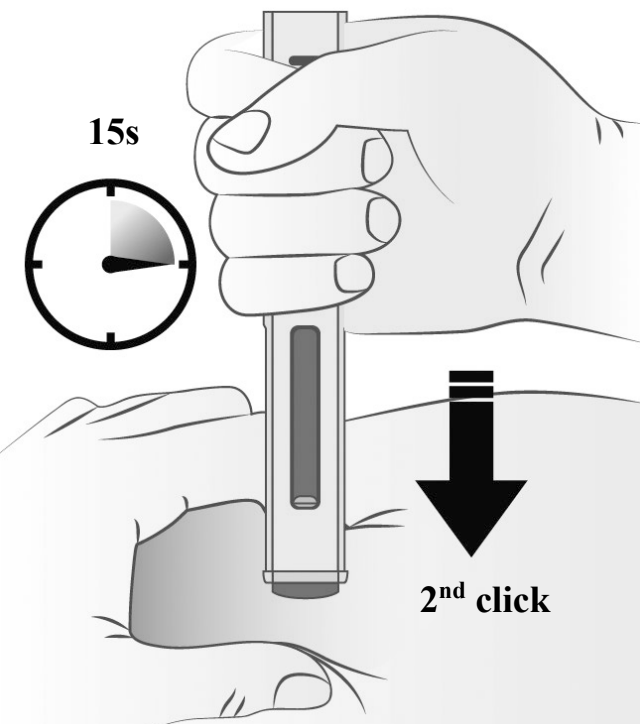
- Push and hold firmly the needle shield at a 90° angle against the pinched skin to start the injection. A first “click” signals the start of injection. (see Figure H)
Figure H
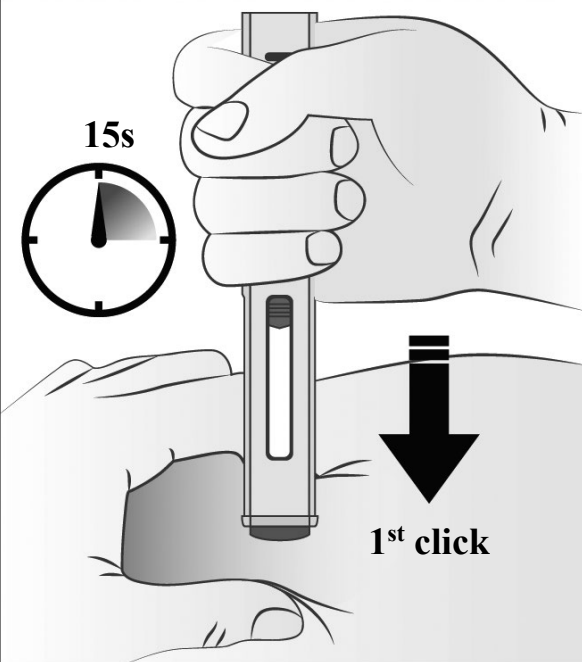
- Continue to pinch the skin while you keep the pre-filled pen in place.
- Do not move, tilt, twist or rotate the pre-filled pen during injection.
- Do not change the injection angle once the needle has been inserted into the skin. Changing the angle can cause the needle to bend or break off. A bent or broken needle can remain stuck in the body or remain completely under the skin.
- Continue to hold the pre-filled pen in place firmly against the skin until the 2nd “click” occurs and the blue indicator stops moving and completely fills the viewing window. (see Figure I)
- Check the viewing window that is filled with the blue indicator before lifting the pen from the skin.
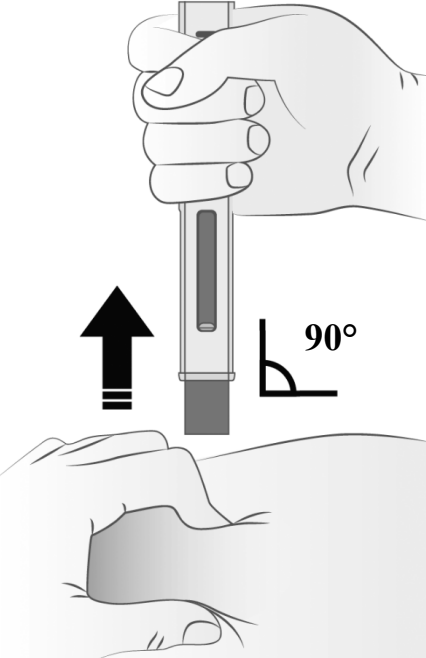
- Remove the pre-filled pen from the skin at a 90° angle. Do not tilt the pre-filled pen during removal. (see Figure J)
- The injection may take up to 15 seconds.
Figure I
The injection is now complete. The needle remains hidden by the needle shield which provides protection against needle-stick injury.
- If the Window area is not filled by the blue indicator then:
- The needle-shield may not have locked. Do not touch the needle-shield of the pre-filled pen, because you may stick yourself with the needle. If the needle is not covered, carefully place the pre-filled pen into the sharps container to avoid any injury with the needle.
- You may not have received your full dose of Tuyory. Do not try to re-use the pre-filled pen. Do not repeat the injection with another pre-filled pen. Call your healthcare provider for help.
Figure J
After the Injection
- There may be a little bleeding at the injection site. You can press a cotton ball or gauze over the injection site.
- Do not rub the injection site.
- If needed, you may cover the injection site with a small bandage.
- The Tuyory pre-filled pen should not be reused.
- Put the used pre-filled pen into your sharps container (see “How do I dispose of used pre-filled pens?”)
- Do not put the cap back on the pre-filled pen.
- If your injection is given by another person, this person must also be careful when removing the pre-filled pen and disposing of it to prevent accidental needle stick injury and passing infection.
How do I dispose of used pre-filled pens?
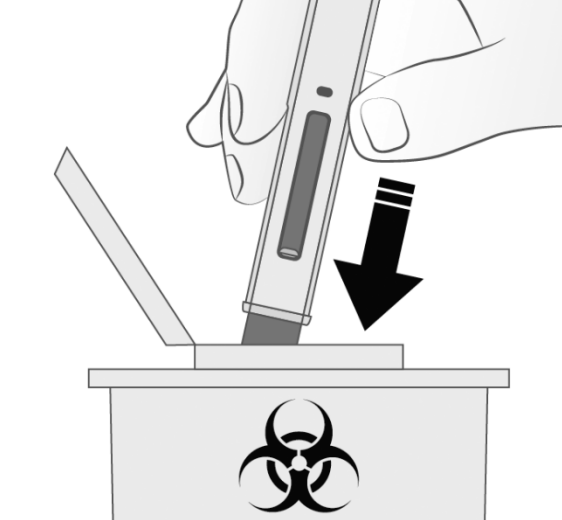
- Put your used Tuyory pre-filled pen and cap in a sharps disposal container right away after use (see Figure K).
- Do not throw away (dispose of) the pre-filled pen and the cap in your household trash and do not recycle them.
Figure K
- Dispose of the full container as instructed by your healthcare provider or pharmacist.
- Always keep the puncture-resistant container out of the sight and reach of children.
Keep the Tuyory pre-filled pen and disposal container out of the reach of children. Record your Injection
- Write the date, time, and specific part of your body where you injected yourself. It may also be helpful to write any questions or concerns about the injection so you can ask your healthcare provider.
Patient advice regarding hypersensitivity reactions (also known as anaphylaxis, if severe)
If you develop symptoms such as, but not limited to skin rash, itching, chills, swelling of face, lips, tongue or throat, chest pain, wheezing, difficulty breathing or swallowing or feeling dizzy or faint at any time while not at the clinic during or following an Tuyory injection you should seek emergency care immediately.
Patient advice regarding early recognition and treatment to limit risk of a serious infection
Be alert for the first signs of infection such as:
- body aches, fever, chills
- cough, chest discomfort/tightness, shortness of breath
- redness, heat, unusual swelling of skin or joint
- abdominal pain/tenderness and/or change in bowel function
Call your doctor and seek medical attention without delay if you think you might be developing an infection.
If you have any questions or concerns about your Tuyory pre-filled pen, talk to your healthcare provider familiar with Tuyory.